
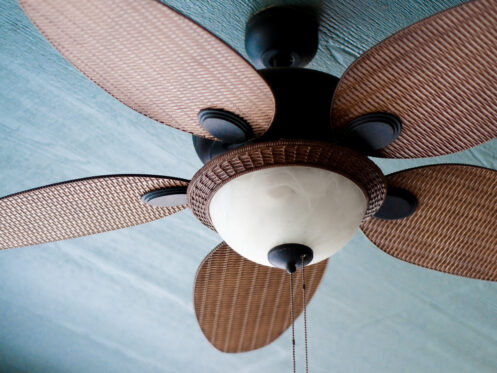
A ceiling fan should serve as a quiet, efficient source of home comfort. It gently circulates air to keep your indoor living space pleasant. When your fan begins clicking, humming, or rattling, that peaceful ambiance disappears quickly. Unusual noises are far more than a simple daily distraction. These sounds often signal an underlying mechanical or electrical issue that needs attention.
This helpful guide offers homeowners insights into diagnosing noisy ceiling fans. We will explore common sound causes, explain what different noises mean, and review basic troubleshooting steps. You will also learn when professional electrical service is the best solution for restoring quiet comfort to your home in Nashua, NH.
Why Is Your Ceiling Fan Making Noise?
Over years of continuous use, your ceiling fan naturally experiences physical wear and tear. Constant spinning motion loosens fasteners, degrades internal motor bearings, and shifts delicate blade alignment. These minor physical shifts often cause unwanted noise. Quiet fan performance depends on every part working together seamlessly.
Some fan noises stem from minor issues that require minor adjustments. Other sounds indicate serious trouble within the motor assembly, fan balance, or mounting framework. Ignoring persistent sounds reduces cooling efficiency, poses safety hazards, and can cause complete system failure over time. Learning how to fix a noisy ceiling fan helps keep your home safe.
Improper initial installation remains another common source of recurring fan noise. An insecure mounting bracket or an inadequate electrical box creates unit instability and heavy vibrations. Over time, normal vibrations loosen screws on even well-installed units.
A faint motor hum differs significantly from a loud metal grinding sound. Each sound points to a distinct internal component issue. Paying close attention to noise patterns quickly narrows down underlying causes. Never ignore unusual sounds. Running a loud fan puts extra strain on motor components, which can lead to serious damage or sudden failure.
Common Causes of a Noisy Ceiling Fan
Several common issues can turn a quiet ceiling fan into a loud household distraction. Identifying these potential culprits is key to restoring peaceful air circulation. Most daily noise problems trace back to loose hardware, unbalanced components, or worn motor housing.
- Loose screws, mounting brackets, or hardware
- Unbalanced or warped fan blades
- Loose light kits or decorative accessories
- Dust and debris buildup affecting fan balance
- Worn bearings or motor components
- Electrical humming caused by the motor or capacitor
- Poor installation or inadequate ceiling box support
What Different Ceiling Fan Noises Mean
The exact sound your unit makes provides valuable clues about internal mechanical conditions. Learning how to interpret these distinct noises helps you understand the required fix. Certain sounds suggest simple external adjustments, while others require a professional electrical evaluation.
Clicking or Ticking Noises
Clicking or ticking noises often stem from minor mechanical issues. A loose blade-holder screw or a fan blade edge hitting the housing metal can create a ticking sound. While small clicks seem minor, addressing them prevents hardware from loosening further.
Humming or Buzzing
A persistent electrical hum or buzzing sound points toward electrical control issues. This hum usually stems from motor windings, a failing capacitor, or an incompatible dimmer switch. Standard light dimmers installed on fan circuits create loud motor buzzing. Because these issues involve high-voltage wiring, a licensed electrician must inspect the electrical noise.
Rattling or Grinding
Rattling sounds almost always indicate loose structural hardware. Constant fan rotation shakes loose unseated parts, including light kits, glass globes, blade brackets, and decorative canopy covers.
Harsh grinding or scraping sounds are concerning because they indicate internal motor bearing damage. When internal bearings lose lubrication, metal friction produces a loud, harsh noise. This sound signals that the motor needs immediate professional service or a full unit replacement.
Wobbling or Knocking
Excessive wobbling combined with repetitive knocking sounds indicates severe blade imbalance. Warped wooden blades, bent blade arms, or loose ceiling box mountings cause heavy wobbling. A wobbling fixture poses safety risks and requires immediate inspection. Contacting an experienced electrician for complete ceiling fan services ensures safe home repairs.
How to Quiet a Noisy Ceiling Fan
Learning how to quiet a noisy ceiling fan requires identifying and fixing the true root cause. Visual checks help locate loose covers, but lasting solutions require professional expertise to guarantee home safety.
Tighten Loose Hardware
Operational vibrations naturally loosen mounting hardware over time, creating annoying rattles. Everything from blade screws to ceiling bracket bolts can slowly back out. During routine maintenance, a qualified electrician inspects all mounting hardware and secures every component for quiet operation.
Correct Blade Balance Issues
Uneven blade weight distribution causes severe wobbling, noisy rotation, and heavy motor strain. Dust buildup, humidity warping, or manufacturing defects cause blades to lose proper alignment. Fixing a loud ceiling fan often involves professional blade cleaning, pitch measurement, and precision balancing weights to restore smooth rotation.
Repair or Replace Worn Components
Failed motor bearings or blown capacitors require professional diagnostic tools to isolate failed components safely. An experienced electrician accesses internal motor housings to execute safe repairs. If the primary motor windings are damaged, replacing the fan fixture is usually more cost-effective.
When Should You Replace Your Ceiling Fan?
A noisy ceiling fan may signal that your fixture is reaching the end of its useful lifespan. While electricians can repair many minor issues, installing a new fan often makes better financial sense. Knowing when to replace your unit saves time and prevents repeated repair bills.
If your fan needs frequent repairs or recurring noises return quickly, consider upgrading the unit. Constant mechanical issues indicate widespread component wear across the motor assembly. A major drop in airflow performance or slow blade speeds also signals imminent motor failure.
Visible physical damage, such as cracked plastic blades or severe wobbling that balancing cannot fix, justifies a full replacement. Unstable ceiling fixtures create serious safety hazards. Older fan models also consume far more electricity while lacking newer silent motor technology.
Upgrading to a new ceiling fan provides immediate lifestyle benefits. Modern fixtures feature advanced motor engineering for quiet operation, superior airflow, and lower running costs. Scheduling professional ceiling fan installation and replacement ensures your new unit is anchored securely and wired correctly for long-term safety.
Turn to Joyce Cooling & Heating Inc. for Ceiling Fan Repair and Replacement in Nashua
From minor clicking sounds to severe motor grinding, ceiling fan issues require the attention of experienced electricians. At Joyce Cooling & Heating Inc., our skilled electricians have diagnosed and resolved ceiling fan problems for local homeowners since 1995.
As a family-owned, locally owned, and veteran-owned business, we deliver trustworthy service across Nashua. We are proud to be a Lennox Premier Dealer, Mitsubishi Elite Contractor, and BBB Accredited business. As a multi-year Best of Nashua Award winner, we handle everything from minor blade balancing to complete unit replacement. Our team understands complex fixture wiring and completes every job safely.
Do not let a noisy fan ruin your indoor comfort. For expert ceiling fan repair, installation, and replacement in Nashua, NH, and surrounding communities, contact Joyce Cooling & Heating Inc. today.
